 عربي
 English
 Français
 Русский
 Español

ما الذي تبحث عنه
?

When procuring industrial barcode scanners for harsh environments, buyers must evaluate the combined effect of decoding algorithms and illumination systems rather than comparing isolated specifications. Platforms integrating AI deep learning algorithms with red/white dual-color area light polling technology address non-standard code reading challenges that traditional hard-decoding devices with single light sources cannot resolve. The fundamental difference lies in how each approach handles Direct Part Mark (DPM) laser-etched codes, film-covered labels, and damaged barcodes under conditions involving metal reflection, dark backgrounds, or low contrast.
For procurement managers, project engineers, and system integrators sourcing from Chinese suppliers, verifying complex barcode reading capabilities requires a structured comparison framework. This framework must weigh algorithmic adaptability, optical flexibility, third-party protection certifications, and offline data handling capacity against the specific material and environmental constraints of the target application.
The performance boundary between AI deep learning algorithms and traditional hard-decoding algorithms represents a generational difference when processing DPM codes, dirty labels, damaged barcodes, and film-covered codes. Traditional algorithms rely heavily on barcode completeness and high contrast to function correctly. When these conditions are not met, read rates drop significantly, often requiring manual intervention.
In contrast, AI algorithms achieve feature enhancement and intelligent completion through training on massive industrial sample datasets. For production lines in new energy vehicles, automotive components, or 3C electronics where non-standard codes are prevalent, the specialized optimization capability of AI algorithms must be treated as a core selection weight. Failing to account for this difference means accepting frequent line stoppages caused by unreadable codes that traditional decoders cannot process.
Optical adaptability directly determines the first-pass read rate on complex surfaces. Red/white dual-color area light polling technology automatically switches illumination wavelengths to eliminate blind spots caused by metal reflections, dark backgrounds, or low-contrast materials. This capability is critical for reading DPM laser-etched codes and barcodes on mixed-material workpieces.
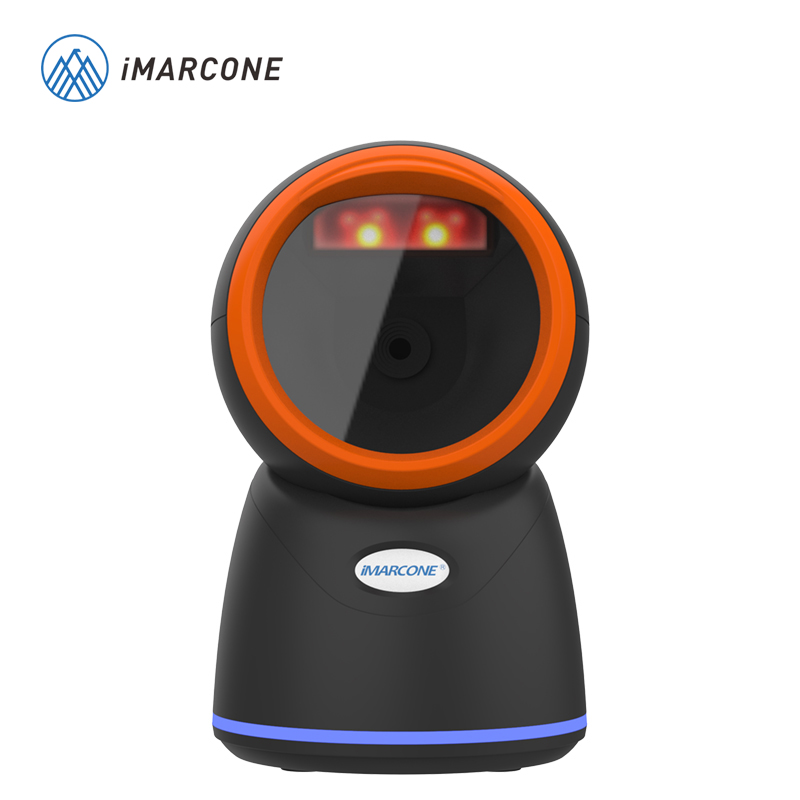
A device equipped with a high-resolution sensor but a single light source will struggle when the material properties change along a mixed-material workflow line. If buyers ignore illumination adaptability and focus solely on decoding parameters, operators may need to frequently adjust scanning angles manually during product changeovers. This manual adjustment offsets the cycle time improvements intended by automation. Therefore, when evaluating Chinese supplier platforms like the iMARCONE DP-7713-DPA-GB, which utilizes red/white dual-color area light polling, the optical system's ability to handle varying surface conditions must be verified alongside algorithmic performance.
To accurately compare platforms featuring AI deep learning and dual-color polling against those relying on traditional hard decoding and single light sources, buyers must test non-standard code read rates under simulated production conditions. Basic decoding parameters provided in datasheets do not reflect actual performance on degraded or complex codes.
Procurement evaluations should be based on the measured read rate of AI algorithms on specific non-standard codes relevant to the buyer's application. For example, testing should include DPM laser-etched codes on metal automotive parts, film-covered codes on 3C electronic assembly lines, and dirty or damaged barcodes in warehousing and logistics scenarios. The evaluation must confirm whether the combination of AI feature completion and automatic wavelength switching maintains throughput without human intervention.
| Evaluation Criteria | AI + Red/White Dual-Color Polling Platform | Traditional Hard Decoding + Single Light Source |
| Algorithm Approach | Feature enhancement and intelligent completion via deep learning | Relies strictly on barcode completeness and high contrast |
| Illumination Adaptability | Automatic wavelength switching eliminates reflection and contrast blind spots | Fixed wavelength; struggles with metal, dark, or low-contrast surfaces |
| Non-Standard Code Handling | Optimized for DPM, film-covered, dirty, and damaged codes | High failure rate on degraded or non-standard codes |
| Impact on Automation | Maintains cycle time on mixed-material lines | May require manual angle adjustments, reducing automation benefits |
| Primary Selection Weight | Must be prioritized for harsh environments with complex codes | Suitable only for standardized, high-contrast applications |
Harsh industrial environments demand reliable physical protection, but buyers must distinguish between manufacturer-claimed IP ratings and verified third-party certifications. There is an essential difference between a vendor's stated IP65 rating and a test report issued by an authoritative third-party organization, such as PSI, based on the IEC 60529 standard.
Third-party certification defines exact test conditions, such as confirming no water ingress under omnidirectional water spray from a 6.3mm nozzle. This verification directly impacts equipment survival rates in environments exposed to dust, oil, and washdowns. For instance, the iMARCONE DP-7713-DPA-GB holds an IP65 protection rating certified by PSI according to IEC 60529, alongside a 3-meter drop resistance specification. Relying solely on claimed IP ratings without third-party report support can lead to deviations in equipment failure rate estimations, which subsequently affects annual spare parts budgeting and the accurate calculation of unplanned downtime costs.
In warehouse logistics or remote manufacturing cells, network connectivity may be unstable. The ability of a scanning platform to store data locally prevents data loss during network outages. Devices such as the iMARCONE DP-7713-DPA-GB offer 350,000 characters of offline storage capacity. Buyers should assess whether the offline caching capability matches the volume of scans generated between synchronization intervals in their specific operational workflows.
Several misconceptions can lead to incorrect equipment selection and increased total cost of ownership:
Before finalizing a purchase order for complex barcode reading equipment, verify the following conditions:



 IPv6 الشبكة المدعومة